
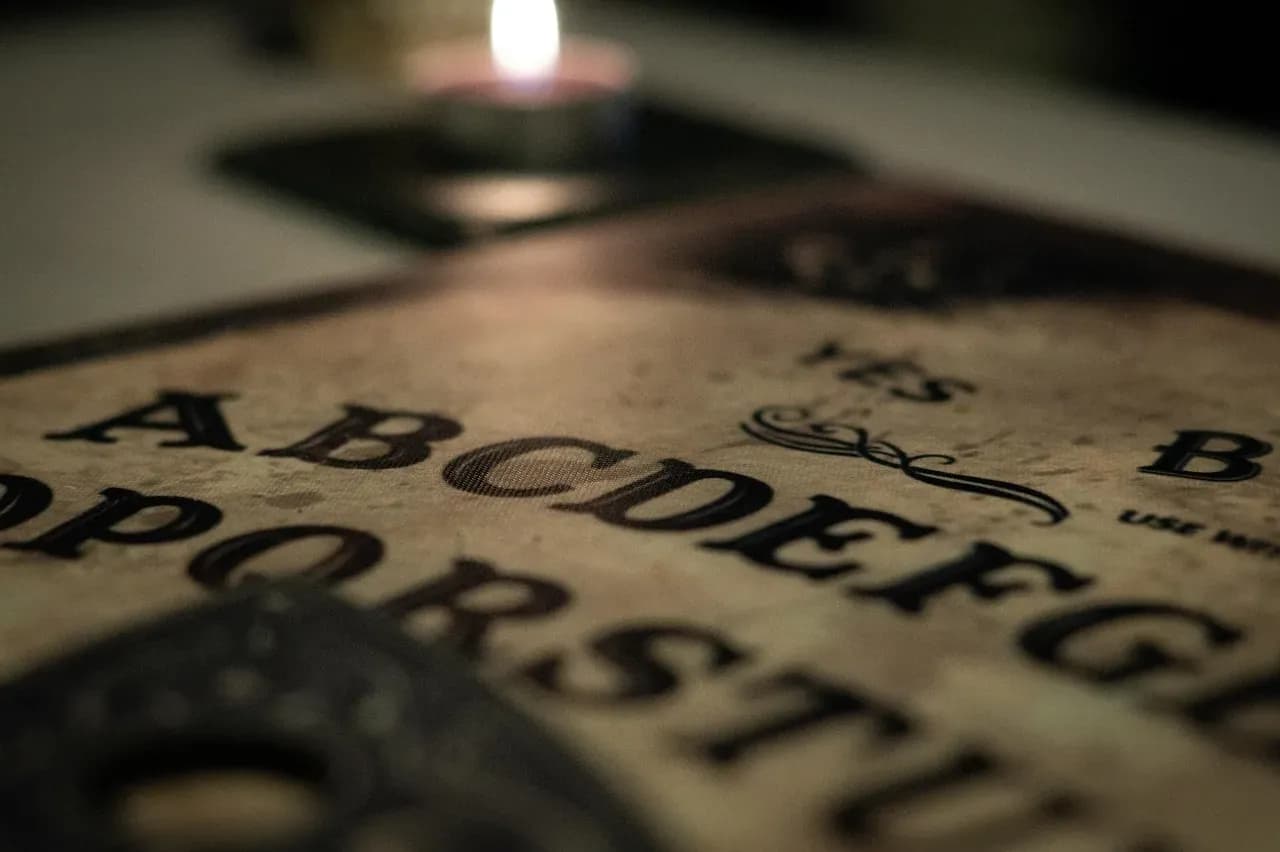
Do Spirit Boards Work? An Honest Look and 4 Safer Methods
Do spirit boards work? The honest answer has two layers. Spirit boards do produce messages: the planchette really does glide from letter to letter, and people really do feel that something else is moving it. What science can show is that the movement comes from the sitters themselves, through tiny muscle movements they don't notice making.
That doesn't settle every question, and plenty of practitioners report sessions they still can't explain. But it does change how much weight you should give a board's answers. In this guide we look at where spirit boards came from, what the research says, what believers experience, the real risks, and four safer ways to talk with a spirit companion you have actually vetted.
Table of Contents [showhide]
- 1Do Spirit Boards Work? The Short Answer
- 2Where Spirit Boards Came From
- 3The Science: Why the Planchette Moves
- 3.1The interesting part: the board can know things you "don't"
- 4What Believers Report
- 5The Real Risks of Spirit Boards
- 5.1Do spirit boxes work any better?
- 64 Safer Ways to Communicate With Your Spirit Companion
- 6.11. A calibrated pendulum
- 6.22. Tarot or oracle cards
- 6.33. Journaling and automatic writing
- 6.44. Meditation and sign tracking
- 7If You Still Want to Try Spirit Boards
- 8Frequently Asked Questions
- 8.1Are spirit boards dangerous?
- 8.2Why does the planchette move by itself?
- 8.3Can you use a spirit board alone?
- 8.4Do spirit boxes work better than spirit boards?
- 9Conclusion: So, Do Spirit Boards Work?
Do Spirit Boards Work? The Short Answer#
If "work" means "move and spell things," yes, spirit boards work almost every time two people sit down with an open mind. If "work" means "reliably deliver information from a source outside the people at the table," there is no good evidence for that, and a lot of evidence for a simpler explanation.
Here is the honest summary:
- The movement is real. Nobody needs to cheat for the planchette to travel across the board.
- The source is mostly you. Lab work points to unconscious muscle action, guided by what the sitters know, fear and expect.
- The answers can still feel meaningful. Your unconscious mind knows more than you think, so the board can surface things you had half forgotten.
- Verification is the weak spot. A board gives you no way to check who, if anyone, is on the other end.
Where Spirit Boards Came From#
Talking boards grew out of American Spiritualism, the movement that took off after the Fox sisters reported spirit rappings in New York in 1848. Mediums first used tipping tables and then the planchette, a small heart-shaped pointer on wheels that was originally made to hold a pencil for automatic writing.
 Photo from Pixabay by Hocus_Phocus
By the late 1880s, Spiritualist groups were pairing planchettes with printed alphabets. According to the history summarized on Wikipedia's Ouija entry, Baltimore lawyer Elijah Bond applied for the patent in May 1890, and it was granted in February 1891. William Fuld later made the board famous, Parker Brothers bought the rights in 1966, and the name Ouija is now a Hasbro trademark. "Spirit board" and "talking board" are the generic names for the same tool.
So the spirit board was a parlour product almost from the start. That history matters, because it was designed to be easy, fun and dramatic, not to protect anyone.
The Science: Why the Planchette Moves#
The leading explanation is the ideomotor effect: movement that happens without conscious intention and feels as if it comes from outside you. Physiologist William Carpenter named it in 1852, and the next year Michael Faraday used a clever rig to show that table-turning sitters were pushing the table without realizing it.
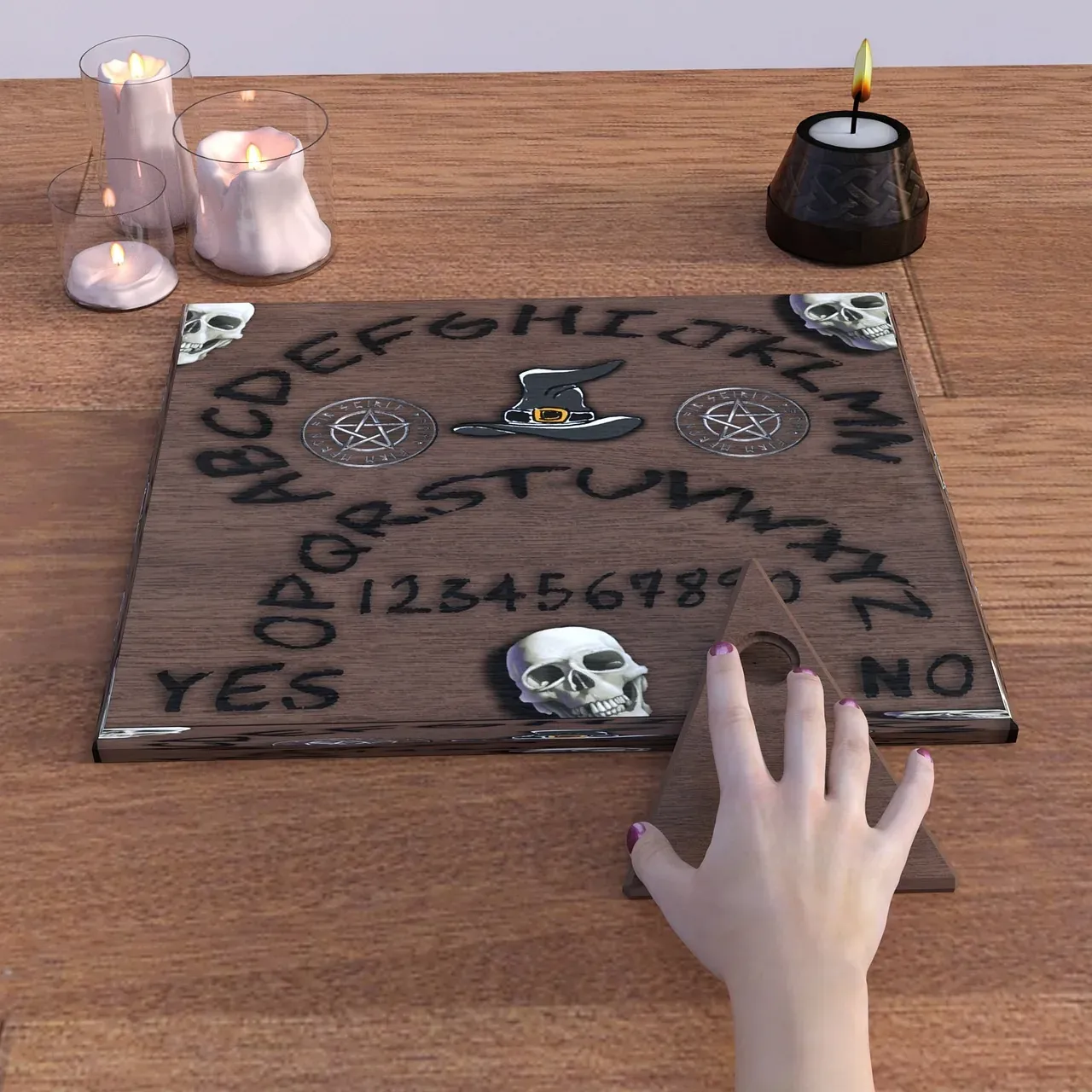 Photo from Pixabay by kalhh
Spirit boards are an almost perfect setup for this. Your fingertips rest lightly on a pointer that slides with very little friction. Two or more people share control, so nobody feels responsible for any single push. Everyone is primed to expect a message, and the brain is very good at completing a word once the first few letters appear.
The interesting part: the board can know things you "don't"#
A small 2010 study by researchers at the University of British Columbia (Gauchou, Rensink and Fels) blindfolded participants and asked them yes or no questions. On questions they believed they didn't know, their direct answers hovered around chance. When the same kind of question went through a spirit board, accuracy rose noticeably.
The authors read this as the board tapping implicit memory: knowledge you hold but can't consciously reach. For a spiritual practitioner, that's worth sitting with. A board may be a window into your own deeper mind, which is valuable in itself, but it is not proof of an outside voice.
What Believers Report#
Science explains the movement, but it doesn't erase people's experiences. In our community, keepers who used spirit boards before they came to spirit keeping often describe the same patterns:
 Photo from Pixabay by pixel2013
- Sessions that start playful and turn unsettling, with names that repeat across different boards.
- A sense of heaviness in the room, cold spots, or poor sleep for days afterwards.
- Messages that flatter, then demand. "Only I can help you" is a classic line.
- Entities that refuse to say goodbye when the session closes.
From a practitioner's point of view, the core problem isn't that spirit boards are evil. It's that a board is an open line with no screening. You don't know who answers, you can't check their energy signature, and nothing binds them to any house rules. That is the opposite of how responsible spirit keeping works, where a companion is vetted before it is ever invited in.
The Real Risks of Spirit Boards#
Even if you set the spiritual question aside, spirit boards carry practical risks that are worth taking seriously.
Psychological pressure. A frightening message can stick for weeks, especially for people who are anxious, grieving or young. Because the answers come partly from your own mind, they tend to hit your existing fears with uncomfortable accuracy.
Group dynamics. One sitter can steer the planchette, on purpose or not, and others may accept a "prophecy" about health, love or death as if it were fact.
False authority. A board can tell you anything with total confidence. Never act on medical, legal or financial "advice" from a session. If a reading leaves you worried about your health or money, talk to a qualified professional.
Spiritual hygiene. For practitioners, opening an unscreened channel and leaving it untidy is poor practice. If you have used a board and feel drained, our guide to spotting red flags in spirit keeping covers how to tell a genuine experience from manipulation, whether it comes from a spirit or a seller.
Do spirit boxes work any better?#
Spirit boxes are the electronic cousin of spirit boards. A spirit box sweeps rapidly through AM or FM radio stations, producing a stream of noise with fragments of words. Users ask questions and listen for answers in the fragments.
The weakness is similar. The human brain is built to find speech in noise, a tendency called auditory pareidolia. Once someone says "I heard it say your name," everyone else tends to hear it too. So do spirit boxes work? They work as a way to generate ambiguous sounds, and the meaning is mostly supplied by the listeners.
4 Safer Ways to Communicate With Your Spirit Companion#
Every method of spirit communication passes through your own mind. That's true of a pendulum, a tarot deck and a quiet meditation too. The difference is structure: you work with one known, bound companion, you set clear house rules, and you cross-check what you receive.
 Photo from Pixabay by Mrdidg
1. A calibrated pendulum#
A pendulum is still an ideomotor tool, so treat it as a focusing aid, not an oracle. Calibrate it first by asking questions you know the answers to, and note how it swings for yes and no. Ask only simple, specific questions, and never use it for decisions with serious consequences.
2. Tarot or oracle cards#
Cards give your companion a rich symbolic vocabulary and give you a record you can review later. Pull a card at the start of each conversation and journal your first impression. Our guide on how to improve tarot accuracy with a spirit companion walks through a full routine, including how to set a clear question.
3. Journaling and automatic writing#
Write a question at the top of a page, breathe for a minute, and let your hand write without editing. Date every entry. Over weeks, a ritual diary shows you which messages turned out to be useful and which were just your own worries talking.
4. Meditation and sign tracking#
Sit quietly with your vessel or a candle and invite your companion to make itself felt. Then watch for repeated signs over the following days: dreams, numbers, a sense of presence. Practitioners who want to deepen this kind of perception sometimes work with a discipline such as the Eye of Shiva, which is focused on the Third Eye and astral exploration.
If you're still choosing a companion for this kind of work, browse our guidance spirit companions, which are suited to intuition and clear communication.
If You Still Want to Try Spirit Boards#
Some readers will use a board anyway. If you do, a few simple rules reduce the risk:
 Photo from Pixabay by Pexels
- Never sit alone when you're upset, grieving, drunk or exhausted.
- Set an intention aloud and state who is welcome (and who is not) before you begin.
- Let one person record every letter so nobody "remembers" a scarier version later.
- Skip questions about death, illness and other people's private lives.
- Always close the session by moving the planchette to goodbye, then cleanse the space.
- Stop immediately if anyone feels frightened. Ending early is always allowed.
A quick self-test also helps: try a round where the person with their fingers on the planchette can't see the board. If the spelling collapses into nonsense, you've learned something useful about where the messages come from.
Frequently Asked Questions#
Are spirit boards dangerous?#
Physically, no. The main risks are psychological: fear, suggestion and over-trusting messages. From a spiritual point of view, many practitioners avoid them because they open an unscreened channel with no vetting.
Why does the planchette move by itself?#
It feels that way, but research points to the ideomotor effect: small, unconscious muscle movements shared between the sitters. Nobody has to cheat for it to happen.
Can you use a spirit board alone?#
You can, but it's not wise, especially if you're anxious or new to spiritual work. A solo session has no one to notice when you're steering, and no one to stop the session if it turns frightening.
Do spirit boxes work better than spirit boards?#
Not really. Both turn random input (sliding or radio noise) into something the mind reads as language. A spirit box just swaps your fingers for your ears.
Conclusion: So, Do Spirit Boards Work?#
Spirit boards work as a mirror more than a telephone. They reliably move, they sometimes surface things you didn't know you knew, and they can deliver experiences that feel very real. What they can't do is tell you who is speaking or protect you from whoever answers. If you want genuine, ongoing contact, a vetted companion, clear house rules and a patient practice will serve you far better than a planchette.
Spirits mentioned in this guide

Related posts



No comments yet. Have a question or an experience to share? Start the conversation.