

What Is a Sigil? Meaning, History and 5 Steps to Make One

What is a sigil? A sigil is a symbol created to carry a specific magical intention or to represent a specific spirit. You can think of it as a seal: a compact, charged image that stands in for a desire ("I am confident when I speak") or for an entity you work with, so that you can focus, store and send that energy without using words.
Sigils sit at the crossroads of very old ceremonial magic and very modern practice. Medieval grimoires used them as the signatures of angels and spirits. In the twentieth century, the artist Austin Osman Spare turned them into a personal tool anyone could make with a pen and a quiet mind.
This guide covers the meaning of the word, where sigils come from, the main types, how practitioners believe they work, and a simple five-step method to make your own.
Table of Contents [showhide]
- 1What Is a Sigil? A Simple Definition
- 2Where Sigils Come From: A Short History
- 2.1Seals of spirits in the grimoires
- 2.2Planetary sigils and magic squares
- 2.3Austin Osman Spare and the sigil of intent
- 2.4Chaos magic and beyond
- 3Types of Sigils
- 4How Does Sigil Magic Work?
- 5How to Make a Sigil in 5 Steps
- 5.1Step 1: Write your intention
- 5.2Step 2: Reduce the letters
- 5.3Step 3: Design the glyph
- 5.4Step 4: Charge it
- 5.5Step 5: Release it
- 6Sigils in Spirit Keeping
- 7What Is a Sigil Not? 4 Common Myths
- 8Common Beginner Mistakes
- 9Frequently Asked Questions
- 9.1What is a sigil used for?
- 9.2What is a sigil in witchcraft, and how is it different from a symbol?
- 9.3Do sigils really work?
- 9.4Is it dangerous to use a sigil?
- 10Final Thoughts
What Is a Sigil? A Simple Definition#
The word comes from the Latin sigillum, meaning "seal." According to Wikipedia's article on sigils, sigils in older magic were occult signs representing angels and demons that a practitioner might summon, while modern practitioners mostly build them from their own written intentions.
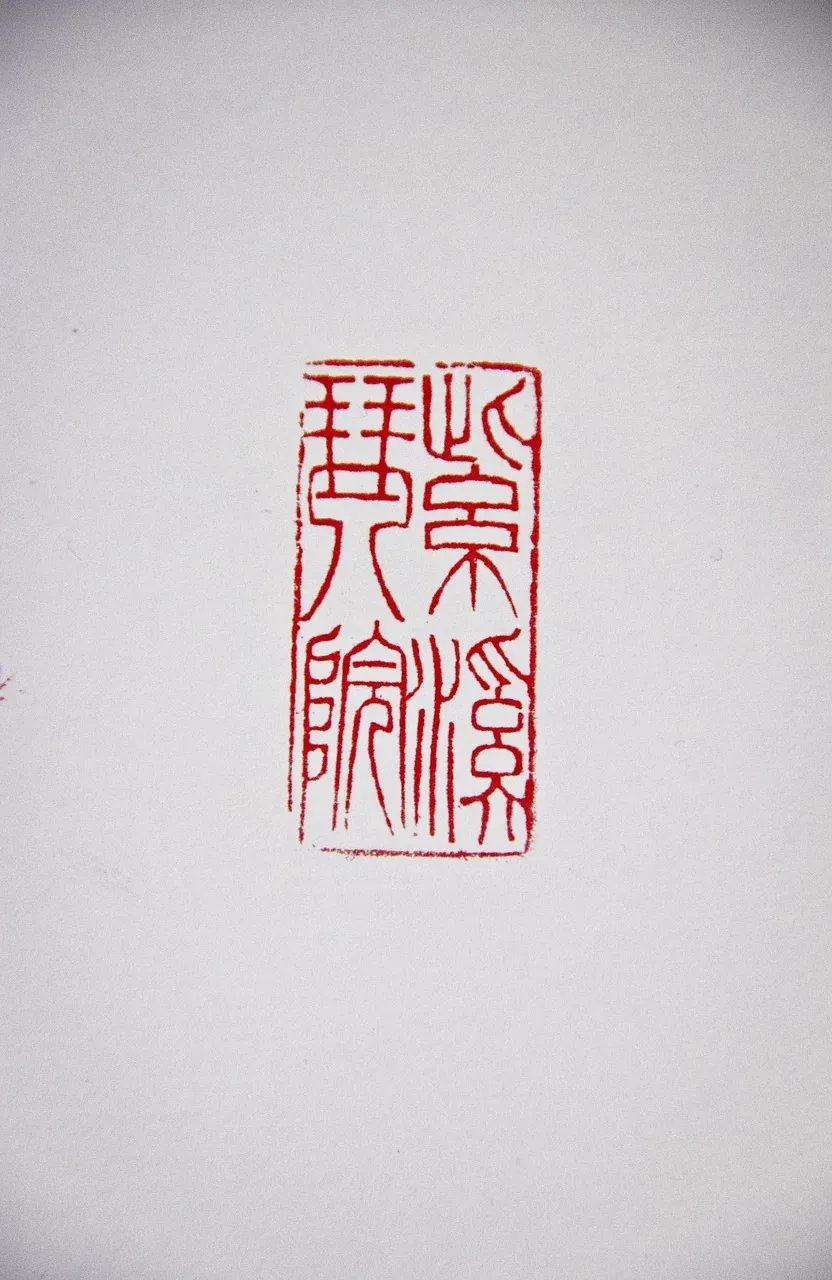 Photo from Pixabay by pinglo
So when someone asks what is a sigil in practice, the most useful answer has two parts:
- A sigil of intent is a symbol you design from your own goal, then charge and release.
- A spirit seal is a fixed symbol associated with a particular spirit, used to call on or connect with that being.
Both share one idea: a carefully made symbol can act as a focal point for energy and attention in a way that ordinary words cannot.
Where Sigils Come From: A Short History#
Seals and signs have been part of magic for a very long time, but a few moments shaped the sigil as most practitioners know it today.
 Photo from Pixabay by Ri_Ya
Seals of spirits in the grimoires#
Medieval and Renaissance grimoires recorded the seals of named spirits. The best known is The Lesser Key of Solomon, whose first book, the Ars Goetia, gives a seal for each of 72 spirits. A magician would draw the seal on parchment or metal as part of an evocation.
Planetary sigils and magic squares#
Another method turned a spirit's name into numbers, located those numbers on a planetary magic square, and joined them with lines. The resulting zigzag shape became that spirit's sigil. Many classic planetary sigils were made this way.
Austin Osman Spare and the sigil of intent#
Austin Osman Spare, an English artist and occultist, described a radically simpler approach in The Book of Pleasure (1913). Write a desire, remove repeated letters, combine the rest into an abstract glyph, charge it in a moment of intense focus, then deliberately forget it. Spare believed the forgotten sigil sinks into the deep mind, where it can work without the doubts of everyday thinking.
Chaos magic and beyond#
From the late 1970s, chaos magicians adopted and popularized Spare's method. Today the statement-of-intent sigil is used across witchcraft, chaos magic and spirit keeping, and the comic writer Grant Morrison even coined the term "hypersigil" for long creative works made as sigils.
Types of Sigils#
Not all sigils are made the same way. Here are the main types you will come across:
 Photo from Pixabay by Casthavian
- Word sigils. Built from a written statement of intent using the letter method.
- Pictorial sigils. Built from simple images linked to your goal, such as a key, a shield or a wave.
- Spirit seals. Traditional symbols that belong to a specific entity, such as the Goetic seals.
- Planetary sigils. Traced across magic squares from names or numbers.
- Mantric sigils. Spare's sound-based version, where letters become a chant rather than a picture.
- Hypersigils. Long works, such as a story, artwork or ritual series, treated as one large sigil.
How Does Sigil Magic Work?#
There are two broad explanations, and practitioners often hold both at once.
 Photo from Pixabay by HeungSoon
The psychological view, popular in chaos magic, says a sigil works through the subconscious. Charging it in a focused or ecstatic state plants the intention deep in the mind, and forgetting it stops the conscious mind from interfering with doubt. Your behavior, attention and choices then shift toward the goal.
The spiritual view, common in spirit keeping and ceremonial magic, says a sigil is also an address. A spirit seal works like a doorway or a calling card, helping a practitioner make contact and keep the connection steady. A sigil of intent can be handed to a trusted spirit to carry out.
Neither view is proven by science. Treat sigil work as a practice built on tradition and personal experience, and notice what changes for you over time.
How to Make a Sigil in 5 Steps#
You need paper, a pen and about twenty quiet minutes.
 Photo from Pixabay by Pexels
Step 1: Write your intention#
Write one short, positive sentence in the present tense, such as "I SPEAK WITH CONFIDENCE." Keep it specific and avoid words like "not" or "never."
Step 2: Reduce the letters#
Remove the vowels and any repeated letters. "I SPEAK WITH CONFIDENCE" becomes S, P, K, W, T, H, C, N, F, D.
Step 3: Design the glyph#
Merge the remaining letters into one shape. Overlap lines, rotate letters and simplify until the result no longer reads as words. Many people redraw it several times.
Step 4: Charge it#
Focus on the symbol in a heightened state. Common methods include steady gazing with slow breathing, candlelight meditation, chanting or movement. The goal is a moment of total focus with your mind quiet.
Step 5: Release it#
Burn it, bury it, tuck it away or place it somewhere you will see it without thinking about it. Then let it go. Many practitioners record the date and method in a ritual diary so they can review results weeks later.
Sigils in Spirit Keeping#
For keepers, the answer to what is a sigil goes beyond a solo tool. A companion's seal can strengthen your link to them, and a sigil of intent can be shared with a spirit as a clear, wordless request. Some keepers draw a small sigil for the week's goal and place it beside their companion's vessel during offerings.
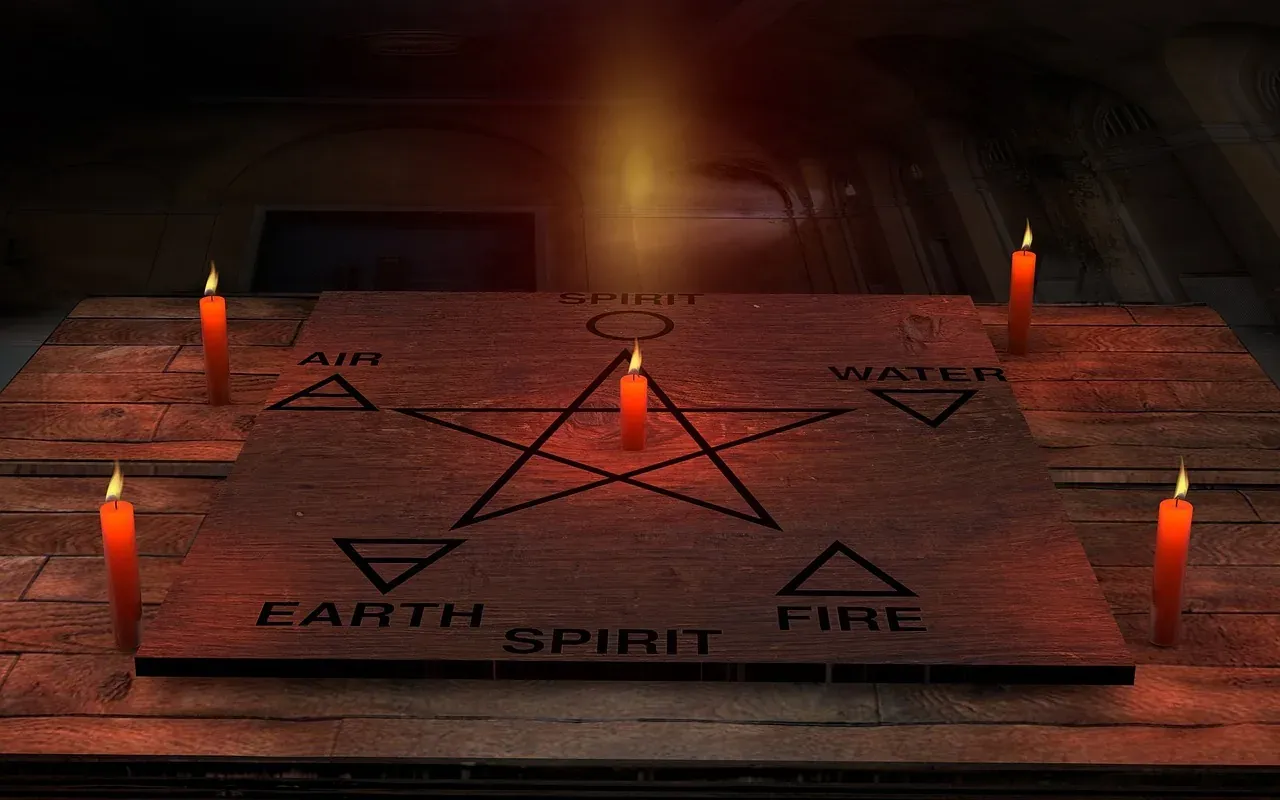 Photo from Pixabay by kalhh
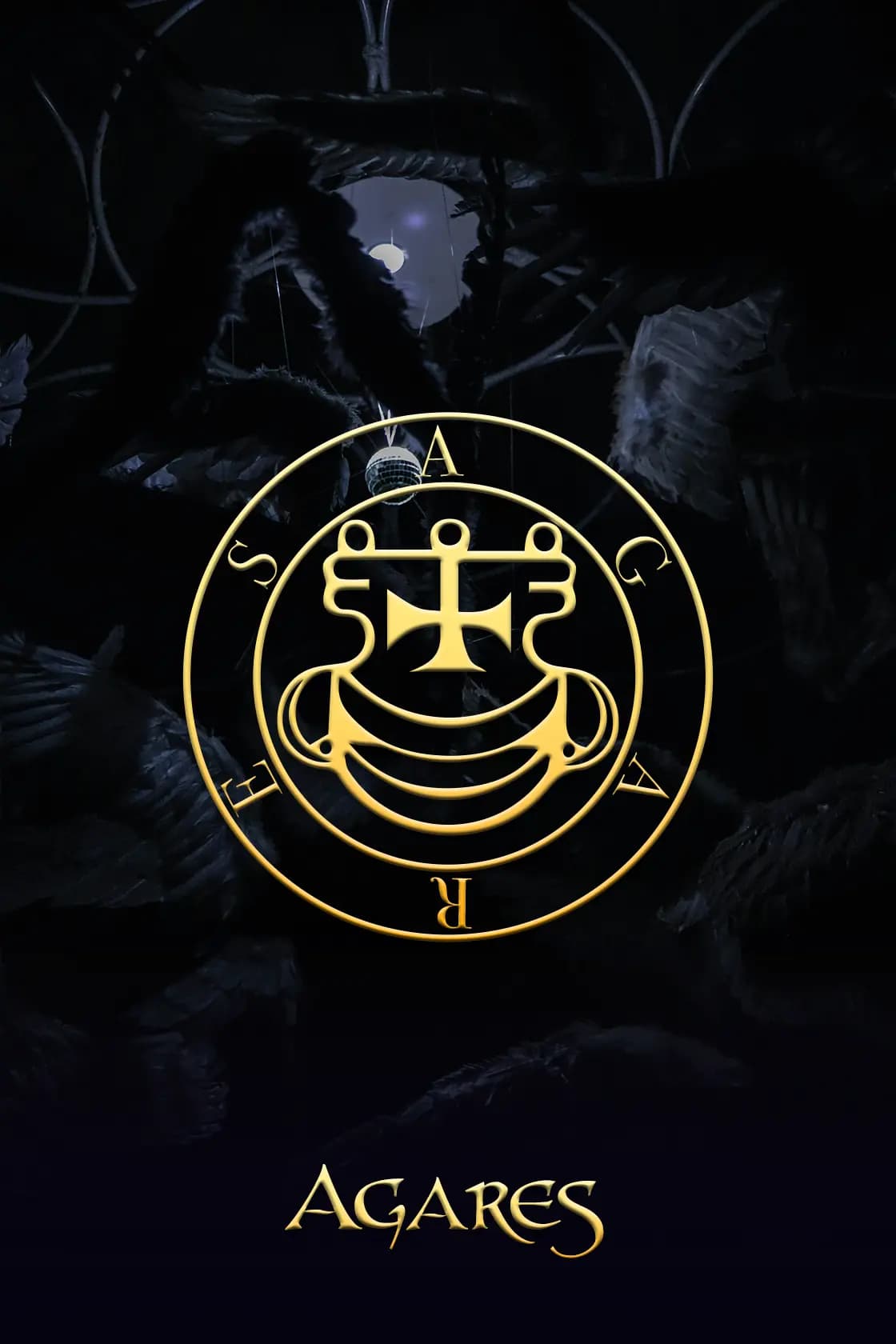
Spirits from the Goetic tradition are a natural fit, because their seals are part of how practitioners have approached them for centuries. The Agares portal, for example, connects you with the Great Duke described as the Goetic Master of Language, Influence and Restoration, commanding 31 legions, and is described as helping with learning a new language and overcoming procrastination. If you want sharper inner vision for sigil and spirit work, the Eye of Shiva discipline is described as an upgrade for practitioners seeking to master the Third Eye and astral exploration.
You can browse more tools in the support magick category, read our guide to spirits for magick support, or learn what working with a spirit companion involves before you begin.
What Is a Sigil Not? 4 Common Myths#
Ask ten practitioners what is a sigil and you will hear ten slightly different answers, but a few myths come up again and again. Clearing them away makes the practice much easier to approach.
-
"Sigils are evil." A sigil is a tool, like a candle or a pen. Its character comes from the intention behind it. Most sigils people make are for confidence, healing, focus or protection.
-
"You need special talent." Spare designed his method so that anyone could use it. Clear wording and real focus matter far more than artistic skill.
-
"A sigil must stay secret forever." Many practitioners keep their sigils private while they are working, simply to avoid conscious overthinking. Once a goal is reached, sharing the design is a personal choice.
-
"A sigil works like a vending machine." Sigils focus intention. They do not replace action, effort or professional advice. A sigil for a new job works best alongside a good application.
Common Beginner Mistakes#
- Overthinking the design. A sigil does not need to be beautiful. It needs to feel right to you.
- Writing in negatives. "I won't be anxious" keeps anxiety in focus. State the outcome you want.
- Charging half-heartedly. A distracted charge gives a weak sigil. Wait for a quiet moment.
- Checking it constantly. Obsessing over results pulls the intention back into conscious worry.
- Using seals without research. If you work with a spirit's seal, learn about that spirit first and set clear house rules.
Frequently Asked Questions#
What is a sigil used for?#
People use sigils for almost any goal: protection, confidence, focus, creativity, attracting opportunities or connecting with a specific spirit. The symbol acts as a focal point for intention and energy.
What is a sigil in witchcraft, and how is it different from a symbol?#
A general symbol, like a pentagram, has a shared meaning many people recognize. A sigil is usually personal, made for one intention or one spirit, and charged for a specific purpose.
Do sigils really work?#
Many practitioners report noticeable results, and the psychological view offers a plausible mechanism through focus and behavior. There is no scientific proof, so approach it as a spiritual practice rather than a guaranteed outcome.
Is it dangerous to use a sigil?#
Making your own sigil of intent is generally considered safe. Using a spirit's seal is more serious, because it is meant to open contact. Research the spirit, set boundaries and work with protection in place.
Final Thoughts#
What is a sigil, in the end? It is intention made visible: a small, personal mark that carries your will further than words can. Whether you see it as a key to the subconscious or a doorway to the spirits, the craft is the same. Write clearly, design with care, charge with focus and let it do its work.
Spirits mentioned in this guide

Related posts


No comments yet. Have a question or an experience to share? Start the conversation.